Table Of Content
- UML Class Diagram of the Visitor Design Pattern
- Create a TechRepublic Account
- Step 6
- Java Programming/Design Patterns
- The Relevance of Design Patterns in Large-Scale Software Development
- Structural Software Design Patterns in Java
- In state design pattern, a state allows an object to alter its behavior when its internal state changes. The object…
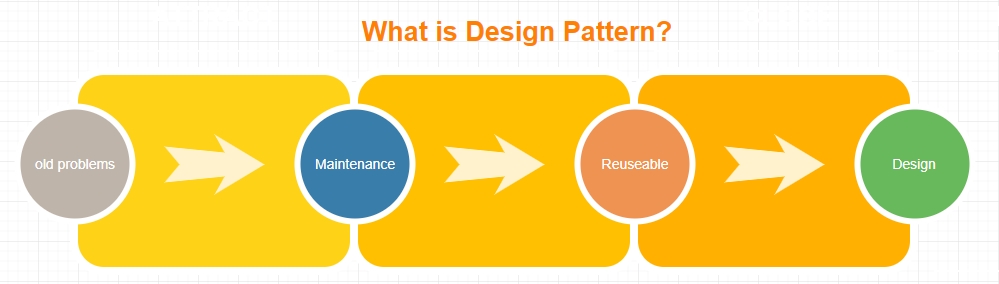
Each generated factory can give the objects as per the Factory pattern. There's a myriad of design patterns, and you're probably familiar with some of them already. Being familiar with them and knowing them by heart can help you increase the speed and quality of your development. We define three subsystem classes, SubsystemA, SubsystemB, and SubsystemC, each with their respective operation methods.
UML Class Diagram of the Visitor Design Pattern
From the class diagram, coders can easily see that the implementation for Factory is extremely straightforward. AccountFactory takes an AccountType as input and returns a specific BankAccount as output. By using the Visitor pattern in this scenario, you can add new types of tasks or visitors to the zoo without changing the existing animal classes. This makes it easier to manage and extend the zoo’s functionality over time. In the world of microservices architecture, design patterns still hold a significant place.

Create a TechRepublic Account
By studying and implementing these patterns in your projects, you can improve your skills as a developer and make your software more adaptable to change. Don't forget to practice implementing these patterns in your projects to get a better grasp of their usage. They help to abstract the instantiation process and make the code more flexible, reusable, and maintainable. Composite Method is structural design pattern, it’s used to compose objects into tree structures to represent part-whole hierarchies.
Step 6

That means, a design pattern represents an idea, not a particular implementation. Flyweight Method is a structural design pattern, it is used when we need to create a lot of objects of a class. Since every object consumes memory space that can be crucial for low memory devices, flyweight design pattern can be applied to reduce the load on memory by sharing objects. Proxy Method is a structural design pattern, it provide to create a substitute for an object, which can act as an intermediary or control access to the real object. Adapter Method is a structural design pattern, it allows you to make two incompatible interfaces work together by creating a bridge between them. Singleton Method is a creational design pattern, it provide a class has only one instance, and that instance provides a global point of access to it.
What Is Object-Relational Mapping (ORM)? - Built In
What Is Object-Relational Mapping (ORM)?.
Posted: Tue, 26 Sep 2023 07:00:00 GMT [source]
History of patterns
The 7 Software Architecture Books Experienced Developers Need to Read - hackernoon.com
The 7 Software Architecture Books Experienced Developers Need to Read.
Posted: Thu, 03 Aug 2023 07:00:00 GMT [source]
We provided code examples for these patterns, discussed their advantages and disadvantages, and provided recommendations for their use. Other concepts, like the SOLID principles and clean code practices, are also crucial for writing efficient, maintainable code. In this code, we’ve created a Coffee class and a SimpleCoffee class that extends Coffee. We then created a MilkCoffee class that also extends Coffee and adds a cost to it. The Observer pattern is a great way to achieve loose coupling between objects. It allows for a highly modular structure, where the subject and observers can be reused independently.
This pattern is also used to provide different kinds of iterators based on our requirements. The iterator pattern hides the actual implementation of traversal through the Collection and client programs use iterator methods. Strategy pattern is used when we have multiple algorithms for a specific task, and the client decides the actual implementation be used at runtime. We define multiple algorithms and let client applications pass the algorithm to be used as a parameter. The mediator design pattern is used to provide a centralized communication medium between different objects in a system. If the objects interact with each other directly, the system components are tightly-coupled with each other which makes maintainability cost higher and not flexible to extend easily.
The Relevance of Design Patterns in Large-Scale Software Development
His expertise lies in OCR, text extraction, data preprocessing, and predictive models. You can reach out to him on his Linkedin or check his projects on GitHub page. The interpreter pattern is used to define a grammatical representation of a language and provides an interpreter to deal with this grammar. The facade pattern is used to help client applications easily interact with the system.
The Singleton pattern ensures a class has only one instance and provides a global point of access to that instance. We are demonstrating the use of decorator pattern via following example in which we will decorate a shape with some color without alter shape class. The Facade pattern provides a unified interface to a set of interfaces in a subsystem. It defines a higher-level interface that makes the subsystem easier to use. The Prototype pattern specifies the kind of object to create using a prototypical instance and creates new objects by cloning this prototype.
They are essentially well-proven solutions to recurring issues in software design. The State pattern is a behavioral design pattern that lets an object alter its behavior when its internal state changes. This pattern involves a single class (the factory) which is responsible for creating instances of other classes.
Produce families of related objects without specifying their concrete classes. There are other creational patterns which I just give a simple example for each of them. Whether you’re a beginner just starting out with Java, or an experienced developer looking to deepen your understanding of design patterns, we hope this guide has been a valuable resource. This pattern ensures that a class only has one instance and provides a global point of access to it.
The three types of design patterns are creational, structural, and behavioral. Each pattern has a specific set of benefits and drawbacks, and selecting the appropriate design pattern for a given situation is important. Implementing design patterns in Java requires an understanding of the pattern itself and familiarity with Java syntax and programming concepts. By following best practices and guidelines for using design patterns, developers can avoid common mistakes and apply patterns effectively in their projects. Overall, incorporating design patterns into Java programming can help developers write better code and achieve their software development goals.
The Sorter class (context) contains a reference to a SortingStrategy instance and provides a setStrategy() method to change the strategy at runtime. The sort() method in the Sorter class delegates the sorting task to the currently set strategy. The Circle class (concrete flyweight) implements the Shape interface and has a color property. The ShapeFactory class provides a static getCircle() method that returns a Circle instance with the specified color.
This is useful when you need a single object to coordinate actions across the system. The Builder Pattern was introduced to solve some of the problems with Factory and Abstract Factory Design Patterns when the object contains a lot of attributes. This pattern solves the issue by introducing a large number of optional parameters. The object may also be in an inconsistent state and it may be built step-by-step. Lastly, the builder class provides a method that will actually return the final Object. In Abstract Factory pattern an interface is responsible for creating a factory of related objects without explicitly specifying their classes.
This pattern treats both individual objects and compositions of objects it allow clients to work with complex structures of objects as if they were individual objects. Higher-Order Components (HOCs) are a design pattern in React that allows you to create new components by wrapping existing ones. They are a powerful tool for promoting code reusability by encapsulating common functionality within a separate component. This functionality can then be injected into other components without code duplication. HOCs are particularly useful for aspects that cut across multiple components, such as data fetching, authentication, error handling, or styling. Design patterns represent the best practices used by experienced object-oriented software developers.
In addition,they can be categorized by their intentand divided into three groups. The Memento pattern captures and externalizes an object's internal state so that the object can be restored to this state later. It's useful when you need to implement undo or rollback functionality. The Command pattern encapsulates a request as an object, allowing you to parameterize clients with different requests, queue or log requests, and support undoable operations. For example, refactoring the Car class may also require changing ProduceCar and AssembleCar.




No comments:
Post a Comment